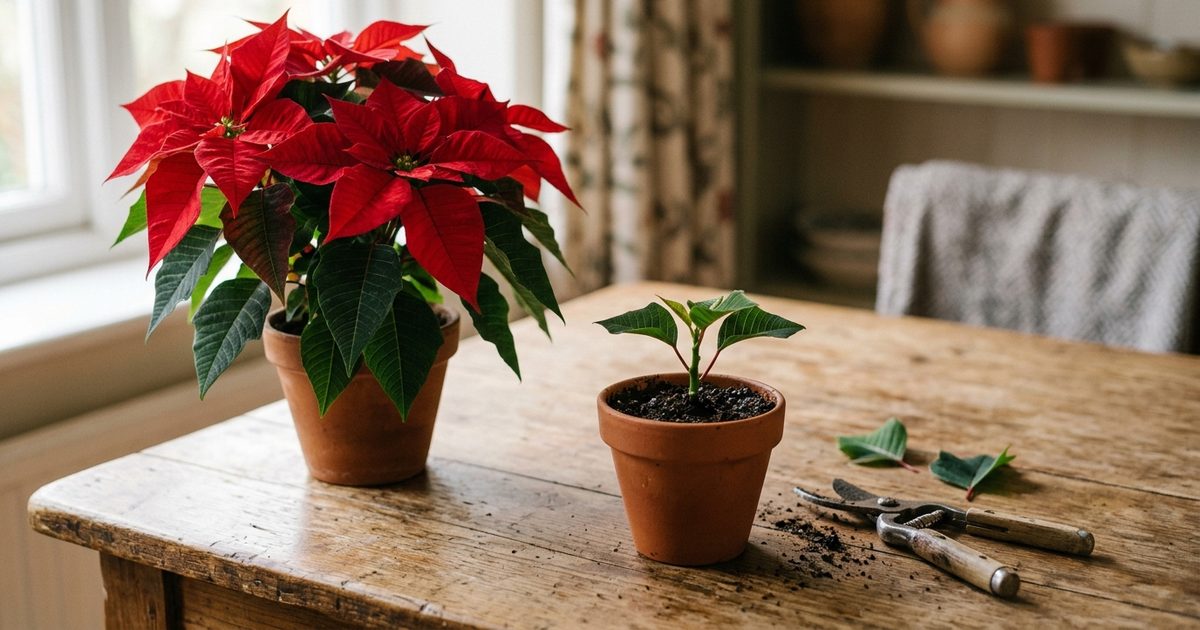
They don’t work in water, and it isn’t your fault. When you cut a poinsettia it oozes a white latex that clouds the glass and ends up rotting the cutting. In damp compost, it does root.
And there’s a second answer, a less welcome one: if you’re reading this in December with the plant just arrived home, now isn’t the time. We’ll come to that, because it matters more than the technique.
Why the glass of water doesn’t work here
Once you discover that propagating plants in a glass of water is almost as easy as it sounds, the temptation is to try it with everything. It works with pothos, it works with spider plants, it works with ivy. And then you look at the poinsettia and think: what about this one?
Not this one. The poinsettia is a euphorbia — Euphorbia pulcherrima — and that whole family shares one trait: break a stem and it oozes a white, milky latex. It’s not that the plant is ill or that you’ve cut it badly. It’s just what euphorbias do.
In a glass, that latex has nowhere to go. It clouds the water, sticks to the cut and the cutting rots before it’s grown a single root. It isn’t bad luck: it happens almost every time.
What does work: straight into compost
The plan is to get the latex out of the way before planting, and skip the glass altogether.
1 · Let the cut stop bleeding. That’s genuinely the word gardeners use, and it describes the scene rather well. Wait a few minutes for the latex to stop; if you’re in a hurry, dip the end in lukewarm water for a moment until it stops coming out, then dry it well.
2 · Choose the right piece. A tender shoot eight to ten centimetres long, with two or three leaves and at least one node, which is where the roots come from. A bare stretch of stem won’t produce anything, however much you fuss over it.
3 · Strip the lower leaves. Any that would end up buried will rot and take the cutting with them. Two or three at the top is plenty.
4 · Damp compost, not waterlogged. The finger trick works just as it does with a grown plant: damp to the touch, not sodden.
5 · Warmth and humidity around it. A clear plastic bag over the top, not touching the leaves, and indirect light. Never direct sun: inside the bag you’ve got a greenhouse in ten minutes and you’ll cook it.
And then, patience. This is measured in weeks, not days like the pothos in its glass, so don’t dig it up every other afternoon to see how it’s getting on — which is exactly what you’ll want to do.
Timing matters more than technique
This is the part almost nobody mentions, and the one that really decides how it goes.
The poinsettia arrives home in December, in full bloom, with all its red bracts on show. That’s precisely the worst time to cut it. The plant has all its energy going into flowering and its stems are already mature and tough.
The right time is spring, when the plant has lost its colour, gets cut back and starts putting out new, tender shoots. Those shoots will give you cuttings. A December stem, almost never.
So if it’s sitting in front of you now: don’t cut it. Look after it, get it through the winter, and when you cut it back in spring, use the trimmings — which you were going to throw away anyway.
Did you know? The poinsettia has a reputation as a deadly plant, and it’s a myth. The ASPCA’s entry lists it as toxic to dogs and cats, but describes the effect as irritation of the mouth and stomach, sometimes with vomiting, and says in so many words that its toxicity is generally over-rated.
The latex: on your hands and around pets
The same latex that ruins the cutting also irritates the skin. Wash your hands after cutting and don’t rub your eyes in the meantime. If you’ve got sensitive skin, gloves and you’re done.
With pets at home, the poinsettia belongs in the group we covered in cat-safe houseplants: a rough time, not an emergency. It isn’t a lily, nor anything like one. But it’s still a rough time you can avoid, so keep it out of reach — and if you think one has chewed a leaf, call the vet.
And if it doesn’t root
It can happen, even if you do everything right and in spring. Poinsettias are among the fussiest cuttings there are, much more so than pothos or spider plants.
If it doesn’t take, it doesn’t mean you’re bad with plants. It means you picked the difficult one, which is a different and rather more honourable thing.
And if you fancy a quick win in the meantime, a pothos cutting in a glass roots in two weeks and hardly ever fails. It isn’t cheating: it’s a morale boost.
Start today: if you’ve got a poinsettia, don’t cut it. Make a note for spring, when you cut it back — that’s when the trimmings are worth something.
Frequently asked questions
Can you root poinsettia cuttings in water?
Not really. When cut, it oozes a white latex that clouds the water in the glass and the cutting nearly always ends up rotting. What does work is planting it straight into damp compost, once the cut has stopped oozing latex.
Why does it ooze a white liquid when cut?
Because the poinsettia is a euphorbia (Euphorbia pulcherrima), and that whole family oozes a milky latex when a stem is broken. It doesn’t mean the plant is ill: it’s exactly what any euphorbia does when cut.
When is the best time to take poinsettia cuttings?
Spring, when the plant is cut back and starts putting out new shoots. December is the worst time, even though it’s when poinsettias arrive home: in full bloom the plant has all its energy in its bracts and the stems are too mature.
How do you root a poinsettia cutting in compost?
Cut a tender shoot eight to ten centimetres long with two or three leaves and at least one node, wait for the cut to stop oozing latex, strip the lower leaves and plant it in damp but not waterlogged compost. Then warmth, indirect light and humidity around it, and weeks of patience.
Are poinsettias poisonous to dogs and cats?
Much less than their reputation suggests. The ASPCA lists them as toxic to dogs and cats, but describes the effect as irritation of the mouth and stomach, sometimes with vomiting, and adds that their toxicity is generally over-rated. They’re a rough time, not an emergency. Even so, if you think one has chewed a leaf, call the vet.