Before the list, the most important thing in this article: not everything ‘toxic’ is the same. Most lists lump together a plant that gives your cat a sore mouth for a while and one that can kill it in two days, and that does more harm than good — people panic about what doesn’t matter and relax about what does.
So the serious stuff first, which is a single family, and one you probably don’t have in a pot.
The real emergency: lilies
True lilies — the genus Lilium, and daylilies too, Hemerocallis — cause severe kidney damage in cats. The whole plant is toxic and small amounts are enough. According to the ASPCA, it is often fatal if treatment is delayed by more than 18 hours.
And there’s a detail many people don’t know: your cat doesn’t even have to eat a leaf. Drinking the water from the vase, or licking pollen off its fur, can be enough.
The dangerous part is how they get into the house: hardly ever in a pot, nearly always in a bouquet. If you have a cat, bouquets with lilies don’t come through the door. Not in the hallway, not ‘up high’, not even for a little while.
Lily of the valley (Convallaria) is a separate case and also serious: it affects the heart.
Did you know? The peace lily is called a lily, but it isn’t one. It doesn’t belong to the genus Lilium and does nothing remotely similar to a cat: at most, a sore mouth for a while. It’s a good example of why a plant’s common name tells you nothing about whether it’s dangerous.
The ‘rough time’ group: calcium oxalate
This is where most of what you have at home belongs: pothos, peace lily, philodendron, monstera and dieffenbachia.
They all contain calcium oxalate crystals. If your cat chews them, they irritate its mouth: drooling, discomfort when swallowing, sometimes a bout of sickness. It’s unpleasant and worth avoiding, but it rarely goes further — the crystals aren’t absorbed, so they don’t damage organs.
Put another way: if your cat takes a bite out of a pothos, keep an eye on it and call the vet if anything seems off. It’s not the same situation as a lily, not by a long way.
The ones that upset the stomach
Snake plant and aloe vera sit somewhere in between: they can cause vomiting and diarrhoea. Less alarming than a lily, more of a nuisance than a pothos.
The ones you can have without a second thought
All of these are listed as non-toxic to cats on the ASPCA list:
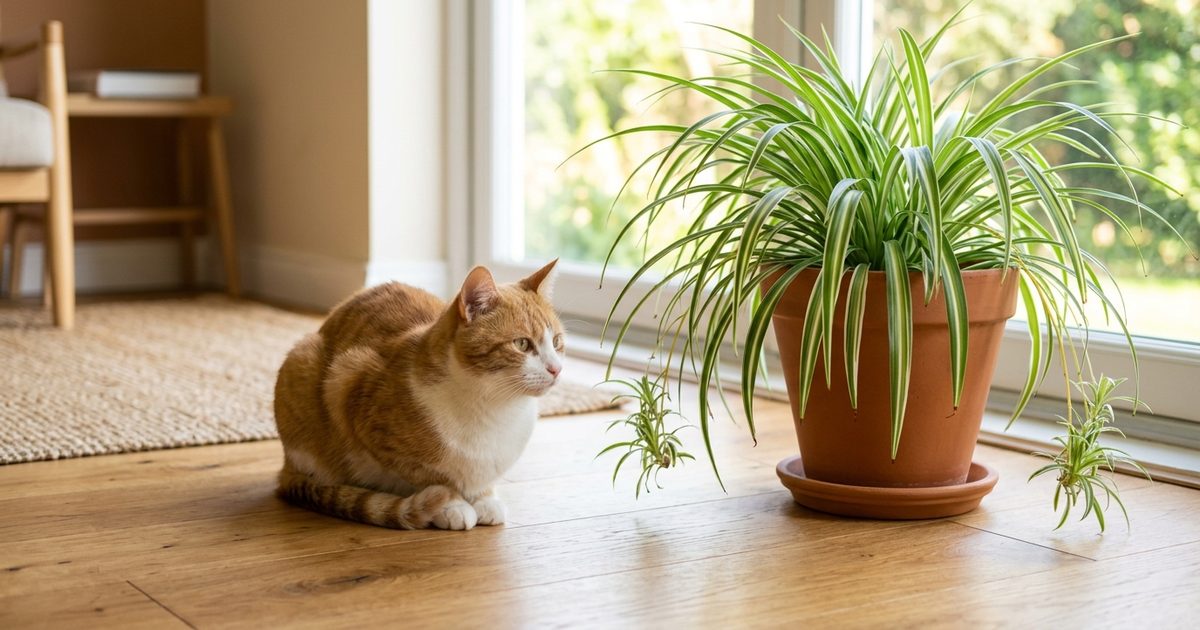
Spider plant (Chlorophytum comosum). The best news on the list, because it’s also one of the easiest to keep. A warning: lots of cats love it and will eat it anyway — it won’t hurt them, but you’ll be left without a plant.
Areca palm. A big, green indoor palm, no risk at all.
Boston fern. The good old classic fern.
Peperomia. Small, tough and with lovely leaves.
A warning the ASPCA itself gives, and one worth repeating: any plant, toxic or not, can upset a cat if it eats enough of it. ‘Non-toxic’ means it won’t poison them, not that it’s food.
And putting them up high: fine with dogs, not so much with cats
This is where it pays to be honest, because it’s the advice you’ll read everywhere: a high shelf solves the problem. With a dog, yes. With a cat, much less so.
A cat climbs wherever it likes, and trailing plants are basically a toy that swings. If you have a cat and a plant from the group above, height helps but it isn’t a barrier — what really works is keeping that plant in a room the cat can’t get into, or simply not having it.
If you think it’s chewed something
Call the vet. Don’t wait to see if it passes, especially if lilies are involved, when every hour counts.
And two specific things: don’t try to make your cat sick yourself — that’s for the vet to decide, not something to do at home — and keep a piece of the plant or a photo. Identifying it is half the job, and the common name isn’t enough, as we’ve just seen with the peace lily.
Start today: look at the plants you have and check for just one thing — whether there are real lilies in any vase. The rest can wait until tomorrow.
Frequently asked questions
Which plants are really dangerous for a cat?
True lilies: the genus Lilium and daylilies (Hemerocallis). They cause severe kidney damage, small amounts are enough and, according to the ASPCA, it is often fatal if treatment is delayed by more than 18 hours. Your cat doesn’t even need to eat a leaf: drinking the water from the vase or licking pollen off its fur can be enough.
Are pothos and peace lilies dangerous for cats?
They’re unpleasant, not dangerous. They contain calcium oxalate crystals that irritate the mouth and cause drooling and discomfort when swallowing, but they aren’t absorbed and rarely go beyond a rough time. It’s nothing like a lily.
Which houseplants can I keep with a cat without worrying?
Spider plant (Chlorophytum), areca palm, Boston fern and peperomia are listed as non-toxic to cats on the ASPCA list. That said, ‘non-toxic’ means they won’t poison your cat, not that they’re food — any plant can upset a cat in large amounts.
Is putting plants up high enough?
With a dog, yes; with a cat, much less so. A cat climbs wherever it likes, and a trailing plant is a toy that swings. If the plant is from the irritant group, what works is keeping it in a room the cat can’t get into, or not having it.
My cat has chewed a leaf — what should I do?
Call the vet, and don’t wait to see if it passes if lilies are involved. Don’t try to make your cat sick yourself: that’s for the vet to decide. And keep a piece of the plant or take a photo, because identifying it is half the job and common names are misleading.
Is a peace lily a lily?
No. The peace lily gets its name from a resemblance, but it doesn’t belong to the genus Lilium and does nothing remotely similar to a cat: at most, a sore mouth. It’s the best example of why a common name is no guide to the risk.