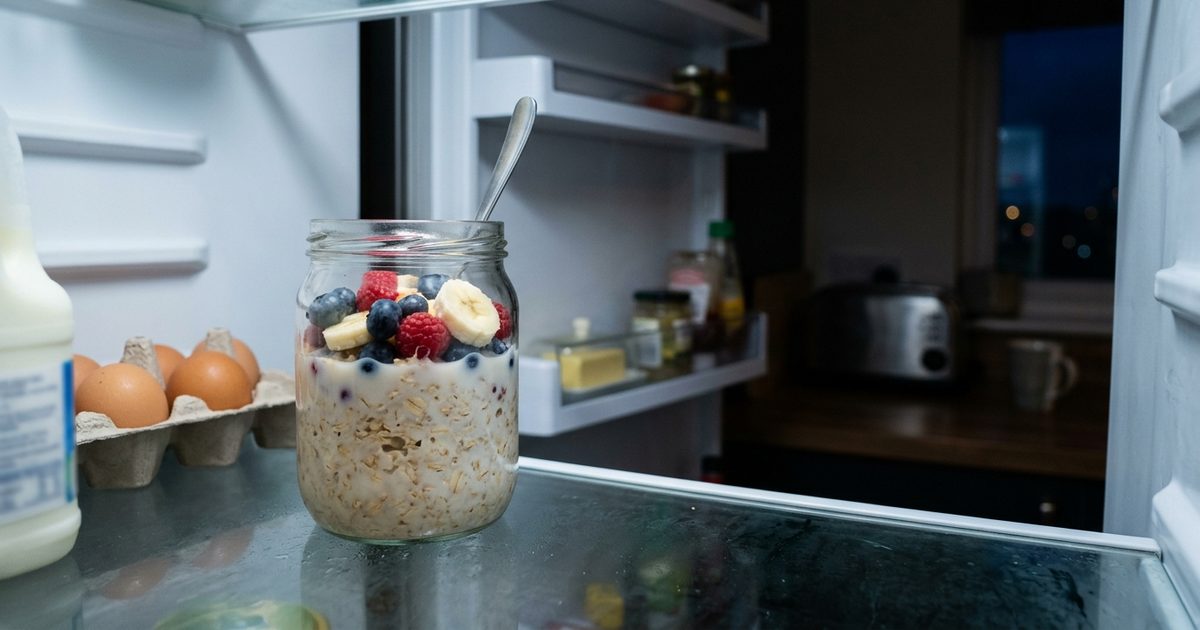
The night before, in a jar: four tablespoons of rolled oats, another four of yoghurt — or half a glass of milk — and some chopped fruit. Lid on and into the fridge. By morning the oats have soaked up the liquid and gone creamy, without you switching on a single hob.
Did you know? Oats contain beta-glucans, a type of soluble fibre with an authorised health claim in the European Union: oat beta-glucans contribute to the maintenance of normal blood cholesterol levels. You need about 3 g a day, which a generous bowl provides.
Being fibre, it’s also filling: it’s one of those breakfasts that keeps you going until lunch without leaving you starving mid-morning. And because soaking softens the oats, it sits better than raw oats scattered on top in a hurry.
The best thing isn’t the oats, it’s the timing. You’re moving two minutes from the morning — when you don’t have them — to the evening, when you’ve got time to spare. Tomorrow’s you gets up and it’s already done.
Start today: mix oats and milk in a jar before bed. Tomorrow, breakfast will be waiting for you.
Frequently asked questions
How do you make overnight oats?
The night before, in a jar: four tablespoons of oats, another four of yoghurt or half a glass of milk, and some chopped fruit. Lid on and into the fridge.
How long do they need to soak?
All night. By morning the oats have soaked up the liquid and gone creamy, without any cooking.
Do you need to cook the oats?
No. Soaking softens them just as cooking does, and it also sits better than eating them raw in a hurry.