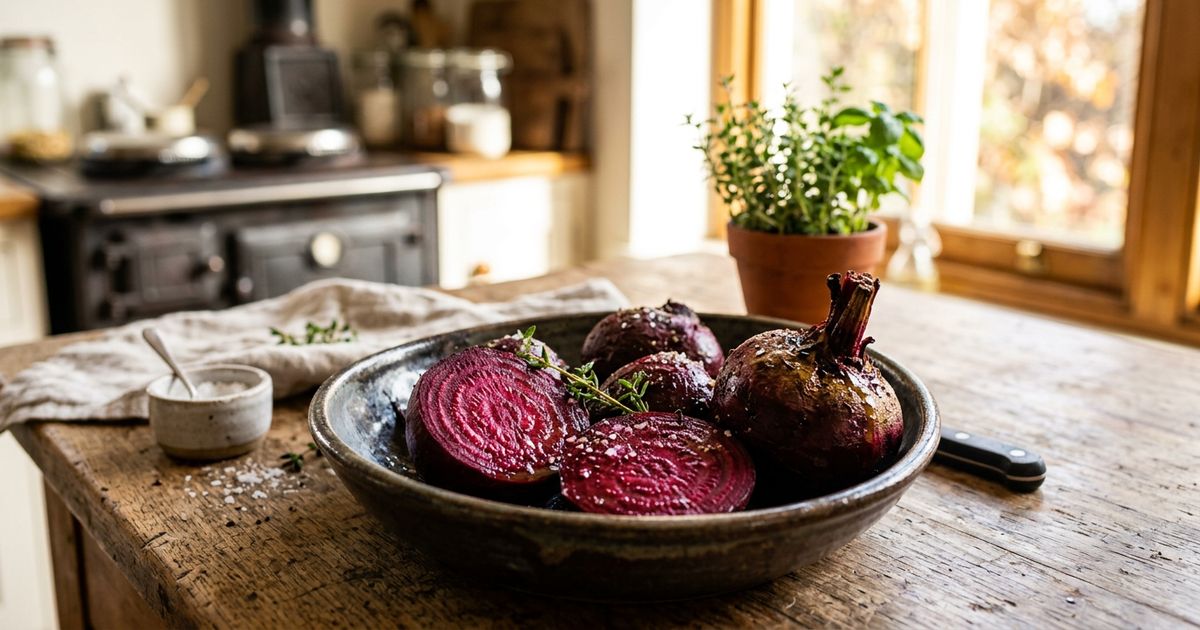
Beetroot has a reputation for being tricky, and it isn’t. It’s sweet, works in salads or roasted, and brightens up any plate. Its one drawback — staining everything pink — has an easy fix.
Roasted beats boiled. Wrap it, skin on, in foil and put it in the oven until a knife slides in easily: that way it keeps its sweetness instead of losing it to the water. Boiling is quicker, but it loses flavour. And raw, grated into a salad, it’s crunchy and delicious.
Did you know? That intense red comes from betalains, the same pigment the food industry uses as a natural colouring (E162, ‘beetroot red’). That’s why it stains so much: it literally is a dye.
To avoid ending up with pink hands and a pink chopping board, cut it on a plate instead of a wooden board, or wear thin gloves. If it splashes your clothes, cold water straight away, never hot. And a squeeze of lemon when you boil it helps stop the colour running quite so much.
Once you’ve got that sorted, it’s one of the most rewarding vegetables there is. Diced with fresh soft cheese and walnuts, grated with carrot and a little orange, or roasted in chunks with other vegetables. Its sweetness balances salty flavours and livens up even the dullest salad.
Start today: roast a beetroot in its skin while you do something else. Once it’s cool, dice it over any salad.
Frequently asked questions
Is beetroot better boiled or roasted?
Roasted, skin on and wrapped in foil: it keeps its sweetness instead of losing it to the water. Boiling is quicker, but it loses flavour.
How do I stop beetroot staining everything pink?
Cut it on a plate instead of a wooden chopping board, or wear thin gloves. If it gets on your clothes, cold water straight away, never hot.
Can you eat beetroot raw?
Yes. Grated into a salad it’s crunchy and sweet; there’s no need to cook it.